
 Unit A1 Upstairs, The Waterloo, 34 Upper Waterloo Road - Check out our Google Business Page
Convenient and Professional Immunization Services
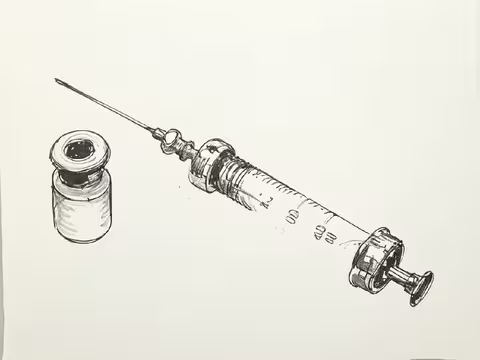
Bola Health offers professional Immunization in Kingston. Our experienced medical professionals deliver vaccinations in a comfortable and welcoming environment, catering to both children and adults. We provide a wide range of vaccines to protect you and your family against common diseases, ensuring optimal health and safety. As a comprehensive medical office, we know that it takes a village to achieve optimum health. Don’t forget to check out our services page to see how we can further help you.
* Please include, in the notes, which vaccines are required.
* A child would be anyone up to 17 years old
* A child would be anyone up to 17 years old
Available Vaccinations
Please contact us for information on specific vaccines
Vaccines
- DPT Vaccine
- Diphtheria
- Pertussis
- Tetanus
- Polio
- Hepatitis B Vaccine
- Hepatitis A Vaccine
- Haemophilus influenzae Type b Vaccine
- Meningococcal ACWY Vaccine
- MMR Vaccine
- Measles
- Mumps
- Rubella
- Herpes Zoster Vaccine
- Chicken Pox Vaccine
- Pneumococcal Vaccine
- HPV Vaccine
- Rotavirus Vaccine
Flu Vaccine (Not available all year)
The flu vaccine changes yearly and often becomes unavailable early in the new year. The vaccine typically protects against 3 to 4 different flu strains and is valid only for that flu season. The virus is constantly changing and your body forgets how to deal with the flu. Therefore, last season’s vaccination doesn’t necessarily protect you in the new season.
Jamaica’s Vaccination Schedule
Stay up-to-date with your child’s immunizations using Jamaica’s official vaccination schedule. The Ministry of Health and Wellness recommends these essential vaccines to protect your child from preventable diseases. Vaccines are available at both public health centers and private paediatricians in Kingston and St Andrew. Below is a table showing when each vaccine should be administered from birth through to school age. Read more about our paediatric service and call or whatsapp us at (876) 807-9283 to book an immunization appointment.
| Age | Vaccine |
|---|---|
| Birth | BCG (for Tuberculosis), Hepatitis B |
| 6 weeks, 3 months & 6 months | Polio, Pentavalent (Diphtheria, Pertussis, Tetanus [DPT]; Hepatitis B; H. Influenzae type b) |
| 12 months | 1st MMR (Measles, Mumps, Rubella) |
| 18 months | 2nd MMR (Measles, Mumps, Rubella); 4th Polio, 4th DPT |
| 4-6 years | 5th Polio, 5th DPT |
| 11-12 years | 6th DT |
| 9-14 years (up to 26 years for girls) | HPV (Human Papillomavirus) |
For professional Immunization in Kingston book an appointment with Bola Health. Our dedicated team is committed to providing high-quality immunization services tailored to your individual needs. With our focus on patient care and safety, you can trust that you and your loved ones are in good hands. Choose Bola Health for reliable vaccinations and ensure a healthier future for your family today.
FAQ
Do I need to get my child vaccinated before they go to School, Nursery or Day Care?
Under Jamaica’s Immunization Regulations (1986, revised in 2013), all children under 7 must receive the required vaccinations before enrolling in school, nursery, daycare, or basic institutions.
What are the benefits of childhood vaccination?
Protects Lives Across Communities – Vaccines help safeguard children in Kingston and throughout Jamaica from serious diseases that can cause long-term disability or death.
Reduces Family Healthcare Costs – By preventing common childhood illnesses, immunization lowers the need for doctor visits and hospital stays—saving money for families in Kingston and beyond.
Prevents Costly Outbreaks – Widespread vaccination helps Jamaica avoid disease outbreaks that are expensive to contain and strain public health resources.
Keeps Kids Learning and Parents Working – Immunized children in Kingston are less likely to miss school due to illness, and parents can avoid taking time off work. For example, a measles infection could keep a child home for up to three weeks.
What is the cost to get vaccinated?
The vaccination cost depends on the which vaccines you need and whether its administered by a General Practitioner or Paediatrician. The total cost will be communicated to you and can/should be requested, at first contact. Generally, the total cost is the cost of the vaccine + cost of the consultation.
When is the best time to get the Flu shot?
The ideal window for getting your flu shot falls between late September and October. Vaccinating during this period ensures you’re well-protected throughout peak flu season, which tends to hit hardest from December through February. Your body needs about two weeks after the shot to build full immunity, and that immunity is strongest during the first three to four months — perfectly aligned with the height of flu season if you time it right.
Timing it wrong can work against you in two ways. Vaccinate too early, say in August, and your protection may start to fade before flu season even gets going. Wait too long, like December, and you risk getting sick during the two-week gap before your immunity kicks in.
If you miss this window, don’t skip the shot altogether. Getting vaccinated in November, December, or even January still offers meaningful protection — a late flu shot is always better than none.
A few situations worth planning around: if you have kids, try to get the whole family vaccinated around the same time. This creates a shared layer of protection right when you need it most. If you’re traveling during flu season, aim to get vaccinated at least two weeks before your trip. Healthcare workers and anyone with a compromised immune system should make early vaccination a priority, and if you’re pregnant, you can get the shot at any point during flu season.